
№ 007026 OCTOBER 2026IDENTITYNORTHERN CALIFORNIA, USA
The Identity of the Zodiac Killer
Five Deaths, Thirty-Seven Claims, One Name Missing
Unsolved since 1968On December 20, 1968, a gunman shot two teenagers on a Northern California lovers' lane and started five years of letters, taunts, and a cipher that stood unbroken for 51 years. He claimed 37 victims. Investigators have confirmed five. His DNA still doesn't match a single name in the file.
What We Know
David Faraday, seventeen, and Betty Lou Jensen, sixteen, parked on a gravel turnout off Lake Herman Road outside Vallejo, California, on the night of December 20, 1968; the case file suggests it was their first date. Someone shot them both and drove off: no note, no call, no reason anyone has ever found.
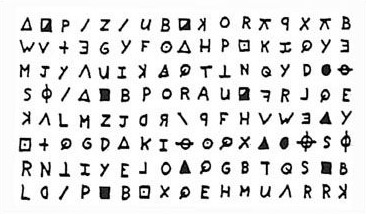
Six months later, on July 4, 1969, the same gun killed Darlene Ferrin and wounded Michael Mageau nearby. This time the killer told someone: forty minutes after the shooting, a man phoned Vallejo police, reported “a double murder” in a flat, rehearsed voice, and described December details that had never been published. A month later, three newspapers each received a third of a 408-symbol cipher and a letter threatening more killing if it didn’t run on the front page. Schoolteachers Donald and Bettye Harden broke it at their kitchen table within the week, guessing that “kill” and “I” would appear often. It read, in part: I like killing people because it is so much fun.
On September 27, at Lake Berryessa, a man in a black hood with a crossed-circle symbol stitched to his chest walked up to Bryan Hartnell and Cecelia Shepard on a picnic blanket, tied them with rope he’d brought, and stabbed them both. Hartnell survived; Shepard died two days later. Before he left, the man wrote the case’s three dates, in order, on the car door in marker, ending: by knife. Seventeen days after that, in San Francisco, he shot cab driver Paul Stine once in the head, and because a radio dispatcher misheard the suspect’s race, two officers who passed a man matching the real description on foot minutes later never stopped him.
He kept writing for five more years, calling himself the Zodiac, mailing ciphers (one, 340 characters, stood unbroken until 2020), and eventually claiming 37 kills. Investigators have only confirmed five deaths and two survivors. Which, if any, of the other thirty-two describe something real, no one has ever said.
The Roadblock
Nobody has ever been charged, and the reasons compound each other. The attacks fell across four separate jurisdictions: Vallejo PD, the Napa and Solano county sheriffs, and San Francisco police, each running its own detectives, evidence, and theories, decades before a joint task force would have been standard. A tip that mattered in Vallejo could sit unread in San Francisco for years.
The physical evidence has its own ceiling. The DNA came from saliva under a stamp, handled who knows how many times before a lab tested it decades later; a 2002 analysis excluded the department’s own longtime suspect, but a small, degraded, possibly mixed sample is a thin instrument for clearing anyone with total confidence, let alone naming someone new. No fingerprint from the letters has matched a suspect. A 1970 FBI handwriting analysis came back inconclusive, and handwriting comparison is a trained judgment call, not a measurement. Even the eyewitnesses disagree: the Presidio Heights composite came from three teenagers who glimpsed a stranger for seconds, at night, from sixty feet, and it doesn’t closely resemble the build described by the one man who survived seeing the killer’s unmasked face up close.
Best Guesses
Four names have absorbed most of the case’s last thirty years, plus a fifth position: that naming any one of them mistakes noise for signal. None has ever been arrested or charged.
The teacher who owned a Zodiac watch
Arthur Leigh Allen is the only person police ever built a case around. A 1991 search of his property turned up a typewriter matching the Zodiac letters, ammunition matching the 1968 rounds, and a watch, brand name Zodiac, with a crosshair logo like the killer’s own symbol. That year, survivor Michael Mageau picked him from a photo lineup, rating his certainty eight out of ten. In 2002, police developed a partial DNA profile from saliva under the letters’ stamps and excluded him. He died in 1992, uncharged; the clearing sample came from preserved autopsy tissue, proponents note, not a live test.
The voice on the dispatcher’s tape
Richard Gaikowski edited a San Francisco newspaper, then ran a Mission District movie theater, notable because the killer’s 1974 letters name-checked current films. Researcher Tom Voigt built the modern case: in 2009, Vallejo dispatcher Nancy Slover heard a recording of his voice and told a History Channel crew it matched her memory of the 1969 caller, and Voigt argues a fragment resembling Gaikowski’s nickname turns up in an unsolved cipher. But the original tip came from a coworker an SFPD inspector once called one of the department’s “top Zodiac kooks.” A Napa detective’s 1986 background check and brief surveillance found nothing to pursue. Police in San Francisco and Napa still declined to test his DNA against the case profile, and handwriting examiners have never agreed on whether his printing matches. He died in 2004, never charged.
The scars in his own darkroom photos
In 2021, a volunteer group called the Case Breakers concluded that Gary Francis Poste, a house painter who’d died three years earlier, was the Zodiac, leaning on decades of his own darkroom photographs, in which a former FBI agent on the team said he saw “irrefutable” scars matching witness descriptions of the killer’s forehead. No agency has agreed. Riverside police called a related claim “without merit” and said they were “100 percent sure” someone else killed the victim tied to Poste; Vallejo police would only say they could neither confirm nor deny it; the FBI restated the case remains open and unsolved. Since he died before any of this surfaced, none of it has been tested against him directly.
No two witnesses saw the same man
Set the names aside and weigh what the case actually offers: composite sketches from different attacks that don’t agree with each other, a 1970 FBI handwriting analysis that came back inconclusive, and DNA from a small, old sample never established as coming from one person at all. Every suspect theory must explain away some piece of this record; this position argues the record itself was never precise enough to convict anyone, including a name nobody has proposed yet. It isn’t a more satisfying answer, and unlike a name, it can’t be cleared by a DNA test. That may be exactly what makes it the honest one.
The Verdict
A clean answer needs one thing none of the four cases above has: a single-source DNA profile, from something more reliable than a 55-year-old stamp, that a genealogy database can actually search. That kind of profile has cracked far colder cases since 2018: if the letters’ DNA is ever upgraded past “partial and possibly mixed,” a database hit would settle Allen, Gaikowski, Poste, or whoever gets named next, in an afternoon.
Short of that, it would take something even the solved ciphers never delivered: a name, in the killer’s own hand, confirmed by a second, independent line of evidence. The 2020 cipher solve proved the case’s oldest puzzles can still fall after enough decades. It also proved that solving a puzzle and solving a murder aren’t the same accomplishment. Two ciphers remain unsolved. So does he.
Where do you stand?
That’s one. There’s another every morning at 6 a.m. local time.
Share where you stand
What Didn't Hold Up
Details that circulate with this case but failed verification against independent sources. Cut from the story above — listed so you know they weren't missed.
“The Zodiac killed 37 people.”
Traces to the killer's own unverified claim in a 1974 letter ("Me – 37, SFPD – 0") — a self-report from an anonymous suspect with an obvious motive to inflate his legend. Investigators have only ever confirmed five deaths and two survivors.
“The 1966 murder of Cheri Jo Bates in Riverside was a confirmed Zodiac killing.”
Riverside police say they are "100 percent sure" Bates was killed by someone other than the Zodiac and call the tie "without merit." A letter raised the connection decades ago, but no department has ever counted her among his victims.
“Robert Graysmith's books, and the 2007 film they inspired, proved Arthur Leigh Allen was the Zodiac.”
The SFPD inspector and a state DOJ agent quoted on the record called Graysmith's account "hogwash" and worse, citing location errors and a version of the Blue Rock Springs attack that contradicts survivor Michael Mageau's own account. Allen was never charged, and DNA excluded him in 2002.
The Rabbit Hole
- FBI Records: The Vault — The Zodiac Killerthe declassified case files themselves, released in parts since 2014
- David Oranchak, Sam Blake & Jarl Van Eycke: the Z340 solution paperthe three solvers' own technical account of breaking the 340 cipher
- History.com: The Zodiac Killer, A Timelinethe fullest single-page chronology of every attack, letter, and cipher
- Newsweek: The Zodiac Killer, Full Suspect List After Gary Poste's 'Identity Revealed'the 2021 Case Breakers claim and every agency's on-the-record response
- ZodiacKiller.com: Suspect Richard Gaikowskiresearcher Tom Voigt's own file on his top suspect — his advocacy, not a verdict