
№ 00206 SEPTEMBER 2026DISAPPEARANCEUPPER XINGU, MATO GROSSO, BRAZIL
Percy Fawcett's Lost Expedition
The Last Letter Came From a Camp Named After a Dead Horse
Unsolved since 1925Percy Fawcett wrote his last letter from a camp named for a horse that had died there years before, then walked into unmapped Amazon jungle with his son and a friend, hunting a lost city he called Z. A century of search parties has never found what happened to them.
What We Know
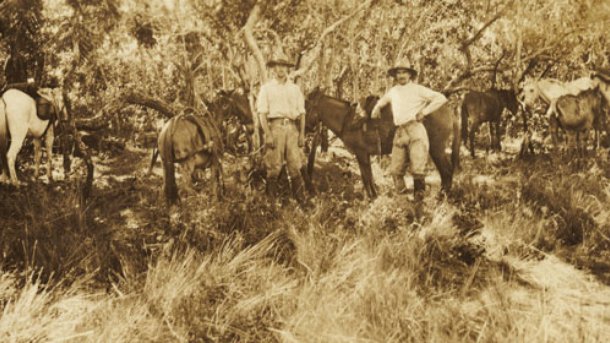
On 20 April 1925, Percy Fawcett left Cuiabá, Brazil, with two companions: his 21-year-old son Jack, and Jack’s childhood friend Raleigh Rimell. Fawcett was 57, a decorated former artillery officer and Royal Geographical Society surveyor who had spent nearly two decades mapping the borders of the Amazon. He was also convinced that a lost, advanced city he called simply “Z” was hidden somewhere in the unmapped interior, a belief built partly on an eighteenth-century Portuguese account of ruins found in the Brazilian backlands. This was his eighth expedition into the jungle. It was meant to be his last.
The three men, with hired laborers, mules, and dogs, pushed northeast from Cuiabá toward the Upper Xingu. By late May they had reached a site Fawcett had named years before: Dead Horse Camp, after a horse of his that had died there in 1920. On 29 May 1925, having sent their remaining guides back, Fawcett wrote to his wife, Nina, one last time. He gave their position and told her not to fear failure. Then the three of them walked on, alone, into country no outsider had mapped.
No confirmed word from any of them reached the outside world again. By January 1927, with almost two years of silence, the Royal Geographical Society formally declared the party lost. The first search reached the region a year later: in 1928, Commander George Dyott found Kalapalo people who described watching smoke rise from the three men’s campfires for five days after they passed through, then nothing on the sixth. Dyott came home believing they’d been killed. He could not say by whom, and neither, in the end, could anyone else. Searchers and journalists have chased the answer for a century, tripped up at least once by a Brazilian bones false alarm. None has closed the case.
The Roadblock
This case has never been short on effort. The trail went cold in the one place nobody could follow it. Dead Horse Camp was the edge of anything mapped; beyond it, Fawcett was deliberately walking toward country he’d chosen for being empty of prior European contact. Whatever happened next happened with no outside witness and left no expedition log. Fawcett’s own diary, if he kept writing in it, never came out of the jungle.
What came out instead were fragments, decades apart, each raising as many questions as it answered. Bones recovered from Kalapalo territory in 1951 were forensically examined in London and ruled out (wrong jaw, wrong height), but not before making international headlines as a solved case. A signet ring surfaced in a Cuiabá shop in 1979, well over a hundred miles and 54 years removed from where the party was last seen, with no account of how it got there. Indigenous testimony, the closest thing to eyewitness evidence, has shifted and split: different groups have blamed each other, and at least one elder later denied any of it happened as reported. Every piece of evidence this case has produced is real. None of it points the same direction twice.
Best Guesses
Killed after the campfires stopped
The earliest and most-cited account is Dyott’s 1928 report of Kalapalo testimony: smoke from the expedition’s fires for five days, then silence. Dyott suspected the neighboring Nahukwá were responsible; the Nahukwá, by his own account, blamed a third group entirely. No side has ever been confirmed, and the story has kept shifting since. A Kalapalo elder named Vajuvi later publicly denied his people had any part in it. What survives is real testimony from real witnesses close to the event, not folklore invented later, but testimony that disagrees with itself about who — which is exactly why no single group has ever been safely named.
Died of hunger, illness, or accident
Fawcett had nearly died of exhaustion and fever on earlier expeditions, and this one carried none of the safety margin those had. German anthropologist Max Schmidt, working the region in 1926, and missionaries on a separate Xingu tributary both favored a plainer explanation than murder: three men with dwindling supplies, no guides, and no map simply didn’t survive the terrain. It requires no encounter with anyone at all, which is also its weakness: it explains a disappearance but not Dyott’s specific, detailed account of camp smoke and armed strangers, brought back only three years later while the trail was still fresh.
Walked away to build a hidden colony
Fawcett wrote for The Occult Review, believed in Atlantis, and had met the theosophist Helena Blavatsky years before his final trip: real biographical facts, not invention. From them grew a theory that he never intended to come back — that “Z” was cover for founding a spiritual colony beyond the reach of England and his creditors. No period letter or diary entry says this outright, and every document Fawcett left behind describes a man planning to return. The theory survives less on evidence than on the fact that Fawcett was, by any account, strange enough for it to feel plausible.
He reached a real city, and died there
Since the 1990s, archaeologist Michael Heckenberger has mapped roughly twenty interconnected pre-Columbian settlements across the Upper Xingu using surveys and LIDAR that didn’t exist in Fawcett’s lifetime. The region is, by multiple accounts, the one Fawcett was aiming for. It means the land beyond Dead Horse Camp wasn’t the empty wilderness later searchers imagined; it was settled and engineered, and almost certainly inhabited in 1925. That doesn’t say what killed Fawcett. It does mean whatever did happened on ground with real people on it. A century of treating “Z” as pure fantasy has to reckon with that.
The Verdict
The 1951 bones failed their dental match in a London lab. The 1979 ring turned up with no traceable chain of custody. A century of ground searches, covering a fraction of the actual terrain, has found no verified campsite, grave, or wreck. Another expedition retracing Fawcett’s route won’t change that: several have tried, and the jungle has absorbed all of them the same way it absorbed him.
One object would move this: something recovered from a documented site beyond Dead Horse Camp, dated, and tied to Fawcett, Jack, or Rimell by name — closer to proof than the ring ever got. Genetic testing against the family line stays possible in theory, if remains are ever found under controlled conditions; none currently on record qualify.
Right now, the Kalapalo, the Nahukwá, Max Schmidt, and Michael Heckenberger’s earthworks all remain equally uncontradicted, and equally unconfirmed.
Where do you stand?
That’s one. There’s another every morning at 6 a.m. local time.
Share where you stand
The Rabbit Hole
- Exploration Fawcett (full text, Internet Archive)Fawcett's own letters and diary excerpts, arranged by his son — the primary record, unmediated.
- London Review of Books: 'Sticky Wicket: Colonel Fawcett's Signet Ring'the fullest single account of the 1928 search, the 1951 bones, and the 1979 ring.
- The Spectator: John Hemming on the Lost City of Z mytha historian's sharpest pushback yet on the popular '100 deaths' version of this story.
- Smithsonian: Lost Cities of the Amazon Discovered From the Airwhat LIDAR has actually found in Fawcett's target region since — for a reader who wants the science, not the legend.
- National Geographic: The man who died searching for the Lost City of Zthe fullest single-article version of the whole throughline, start to present day.