
№ 007228 OCTOBER 2026DISAPPEARANCESOUTHERN INDIAN OCEAN
Malaysia Airlines Flight MH370
239 People, One Turn, No Wreckage
Unsolved since 2014On March 8, 2014, a Boeing 777 carrying 239 people fell off radar over the South China Sea and flew on for seven more hours, alone, tracked only by satellite pings. The costliest search in aviation history has found debris on African shores. It has never found the plane.
What We Know
At 1:19 a.m. on March 8, 2014, Kuala Lumpur air traffic control radioed a routine handoff: “Malaysian three-seven-zero, contact Ho Chi Minh one-two-zero-decimal-nine. Good night.” The reply was just as routine: “Good night. Malaysian three-seven-zero.” It was the last anyone heard from the flight.
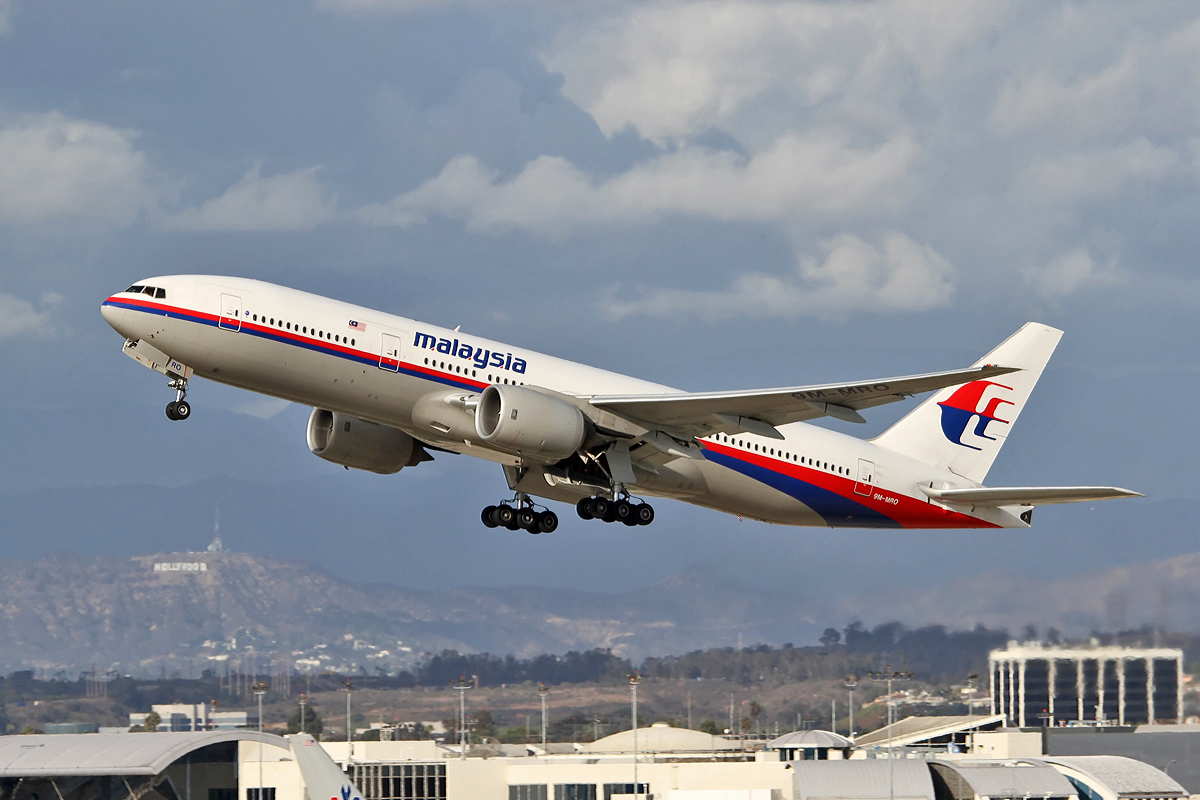
The Boeing 777-200ER, registration 9M-MRO, had left Kuala Lumpur thirty-seven minutes earlier carrying 227 passengers and 12 crew to Beijing. Captain Zaharie Ahmad Shah, 53, had flown for the airline since 1981 and logged more than 18,000 hours; First Officer Fariq Abdul Hamid, 27, was flying his final training sector before certification. Five seconds after crossing into Vietnamese airspace, the transponder dropped from Malaysian radar; thirty-seven seconds later the aircraft vanished from secondary radar entirely. Military radar caught it turning hard back across the Malay Peninsula and out over the Strait of Malacca. Malaysia’s own investigation later found the turn was flown “under manual control and not using autopilot,” before the return faded near 2:22 a.m. No distress call was ever sent.
The plane kept talking, just not to anyone listening for it. Its satellite data unit answered seven automated “handshakes” from an Inmarsat satellite over the next seven hours; the last, partial, arrived at 8:19 a.m., consistent with the engines running out of fuel. Investigators spent months decoding what those signals meant.
Search crews spent a week combing the South China Sea before the satellite data pointed them thousands of miles south into the Indian Ocean, in what became the largest air-and-sea search in aviation history. It found nothing for seventeen months. Then, in July 2015, a barnacle-crusted wing panel washed ashore on Réunion Island; French investigators matched a stamped serial number to the flight within five weeks. Twenty-six more fragments have surfaced since, from Mozambique to Mauritius.
The Roadblock
The case runs on a strange abundance: extraordinary technical evidence, almost none of the ordinary kind. Malaysia’s 449-page investigation could not determine why the transponder went dark, writing only that the systems were possibly switched off manually, “whether with intent or otherwise,” and that it could not establish whether anyone but the two pilots was at the controls. No mayday was sent.
What exists instead is mathematics. Seven satellite handshakes, analyzed for a subtle shift in radio frequency, ruled out a northern route and pointed the aircraft south along one calculated arc: rigorous, but a method that locates a line across an ocean, not a wreck. That stretch of the southern Indian Ocean is among the remotest, least-mapped seabed on Earth, several kilometers deep, searchable only with sonar towed for months. Three expeditions since 2014 have covered more than 200,000 square kilometers and found shipwrecks and mountains nobody had charted. They have not found the plane. Even the debris that has washed ashore carries drift evidence too incomplete to confirm where it started.
Best Guesses
Four explanations remain seriously argued, each surviving the same eleven years of evidence: no note, no distress call, no wreckage pointing at any of them. Investigators who worked the case for years land in different places once they weigh it.
Deliberate diversion by the captain
Malaysia’s 2018 safety report found flight-simulator trials established the initial turn was flown “under manual control and not using autopilot.” Files from Captain Zaharie Ahmad Shah’s home simulator, later detailed in a 2017 ATSB analysis, reportedly included a route into the southern Indian Ocean sharing real similarities with the actual path, though simulated beyond MH370’s real fuel range. Journalist William Langewiesche argued in a 2019 Atlantic investigation that the profile fits a deliberate act: a controlled depressurization, then a long flight south.
Malaysian police, examining the same computer, reached the opposite reading: no matching route, just unremarkable “game-related flight simulations.” The government’s investigation found no debt, no marital conflict, no psychiatric record, and “a smooth career path,” and stated it was “not established” whether anyone besides the pilots was even flying, let alone why. No note, motive, or confession has surfaced. His sister, Sakinab Shah, has rejected the theory outright: “He wouldn’t stoop so low as to murder more than 200 people.”
Depressurization, then a ghost flight
A 2018 review by the ATSB, Boeing, and Inmarsat concluded an “unresponsive crew” event best fits the final hours: a decompression disables the crew, and the plane flies on until its engines flame out. It’s the same mechanism that killed everyone aboard Helios Airways Flight 522 in 2005, whose empty cockpit flew on for two more hours. Frequency data from the final handshake suggests a fast, uncontrolled descent, not a piloted one. The ATSB’s own search director has said the same evidence “eliminated” a controlled ditching.
It explains an ending, not a beginning: nothing about why the aircraft first turned off-route while someone, per the same investigators, was flying it by hand, or why a crew, if one existed, never keyed a radio.
An onboard fire disables the plane
Days after the disappearance, veteran pilot Chris Goodfellow argued the sharp turn was a textbook diversion toward Palau Langkawi’s long runway, after a fire (an overheated tire, perhaps, or an electrical fault) forced systems offline one by one, no one deliberately silencing anything.
No pre-flight defect was on record, no engine data was abnormal, and none of 27 recovered fragments showed fire damage. Other investigators countered that a fire disabling every radio and transponder at once would likely have compromised the airframe first. What kept the theory alive: investigators confirmed the hold carried 221 kilograms of lithium-ion batteries, flagged as a fire-hazard concern during the probe.
Narrowed to an ocean, not a cause
What’s proven isn’t nothing. Seven satellite handshakes, read for Doppler shift and checked against six other 777s flying that night, ruled out a northern path and placed the final position along one arc west of Australia. Three wing and cabin fragments are forensically confirmed as its own, seven more “almost certain,” recovered as far apart as Réunion Island and Tanzania.
None of it substitutes for the two recorders still on the seabed. Without them, no theory here can be confirmed or eliminated, only ranked. A 2023 barnacle-shell isotope study could reconstruct only the debris’s final five months adrift, not its origin. Three seabed searches, the last ending January 2026, have mapped over 200,000 square kilometers and found everything except the object that would settle this.
The Verdict
One of MH370’s two black-box locator beacons had an expired battery before the plane ever left the gate — a maintenance lapse revealed in Malaysia’s 2015 interim investigation report, unconnected to anything that happened over the South China Sea. It sits inside a case built almost entirely on mathematics: satellite geometry, Doppler shift, barnacle isotopes, fifty thousand simulated drift paths run to find the one that fits an ocean, not a cause.
The seabed is what’s left to check. Ocean Infinity is contracted to search again between November 2026 and June 2027, on the same no-find-no-fee terms that produced nothing in 2018 or 2025. Malaysia’s next-of-kin have asked, on the record, for exactly that: one more pass over the last uncharted patch of the priority zone. A few hours of instrument data and cockpit audio, from either recorder, would settle every theory above. Nobody has found either one.
Where do you stand?
That’s one. There’s another every morning at 6 a.m. local time.
Share where you stand
What Didn't Hold Up
Details that circulate with this case but failed verification against independent sources. Cut from the story above — listed so you know they weren't missed.
“Relatives who called passengers' phones after the disappearance heard them ring, meaning the phones — and the plane — survived intact somewhere.”
The ringing tone a caller hears is generated by their own network attempting the connection; it doesn't confirm the other phone is powered on or reachable. No investigation ever found evidence a passenger's phone connected to any network after the flight vanished.
“MH370 was secretly shot down by the U.S. or Malaysian military, and the wreckage evidence was covered up.”
No missile signature, military radar corridor, or acoustic evidence supports this, and the debris drift is consistent with the satellite-derived southern Indian Ocean track, not a shoot-down near the last radar contact. It would also require dozens of nations staying silent for over a decade.
“The search was permanently abandoned after each unsuccessful phase — 2017, 2018, and the 2026 conclusion — ended without a find.”
Officials described each ending as a suspension, not a termination. A new contractor search followed the 2017 pause, and after the phase that ended in January 2026, Malaysia's Cabinet extended the same no-find-no-fee agreement with Ocean Infinity through June 2027.
The Rabbit Hole
- Malaysia's Ministry of Transport: the 2018 Safety Investigation Report briefingthe government's own 449-page investigation, summarized in the investigators' own words
- The Atlantic: What Really Happened to Malaysia's Missing Airplanethe fullest single argument for deliberate pilot action — one journalist's case, not an official finding
- AGU Advances: reconstructing a drift path from barnacle shell chemistrythe actual peer-reviewed study reading ocean temperature history out of a barnacle
- Ocean Infinity: Conclusion of the Search for MH370the search company's own account of where the 2025–2026 effort ended, and what's left uncharted
- The Aviationist: how a Doppler shift on a satellite ping found a flight paththe clearest plain-language walkthrough of the physics that redirected the entire search