
№ 002713 SEPTEMBER 2026DISAPPEARANCENORTH ATLANTIC OCEAN, NEAR THE AZORES
The Mary Celeste
The Lifeboat Was Gone. Nothing Else Was.
Unsolved since 1872On 4 December 1872, a passing ship found the Mary Celeste sailing herself off the Azores — seaworthy, provisioned, her cargo untouched, and empty. The only lifeboat was gone. So were all ten people who'd sailed her out of New York a month before. None has ever been found.
What We Know
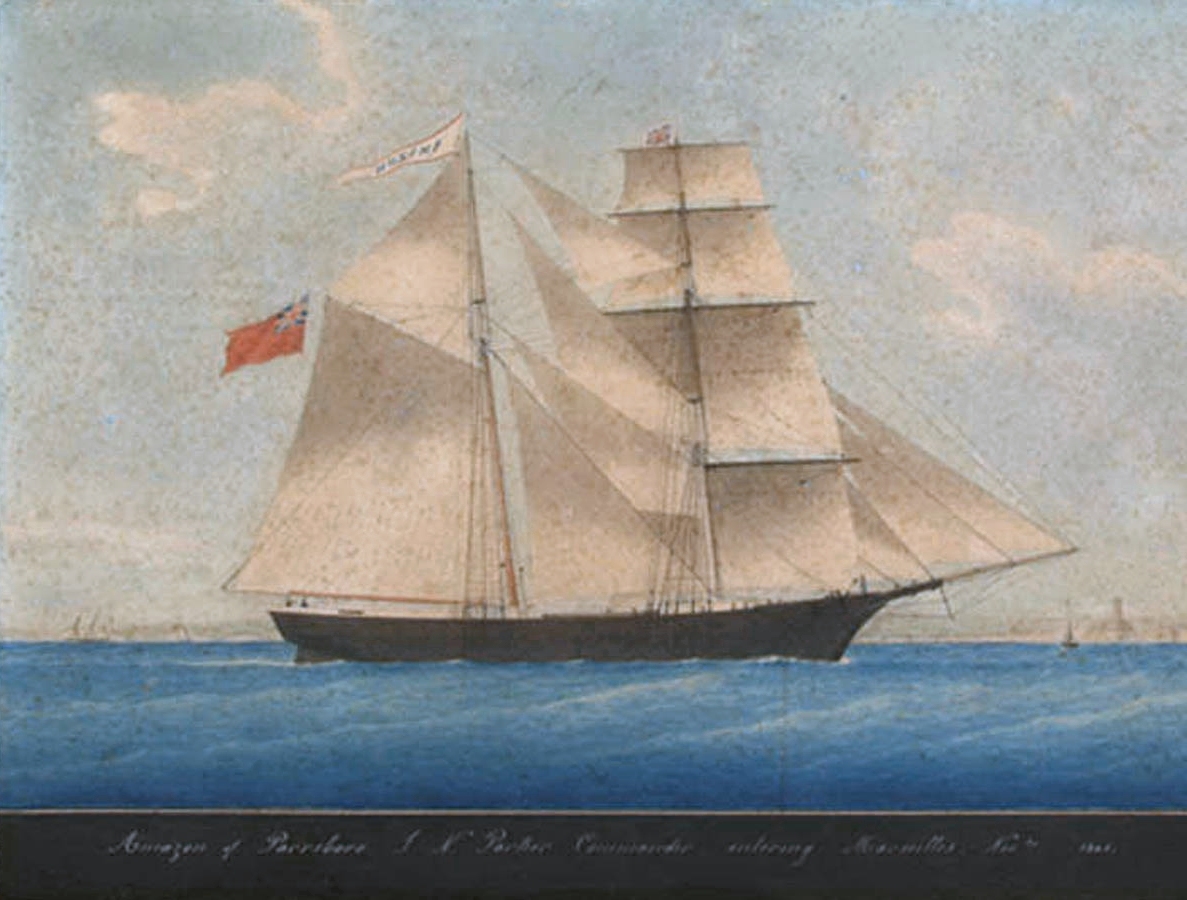
Benjamin Briggs was thirty-seven, an experienced, careful captain, and in October 1872 he’d just spent his savings on a one-third stake in a modest cargo ship, the Mary Celeste. When she sailed from New York on 7 November, he brought his wife, Sarah, and their two-year-old daughter, Sophia, along for what should have been an ordinary five-week crossing to Genoa. Seven crew went with them: two mates, a steward, and four seamen. The hold carried 1,701 barrels of industrial alcohol, deliberately adulterated so no one aboard would be tempted to drink it.
The last entry on the ship’s log slate is timed 8 a.m., Monday 25 November, and puts her six miles off Santa Maria, in the Azores. It records nothing unusual. Nine days and roughly four hundred miles later, another captain out of New York, David Morehouse of the Dei Gratia, an acquaintance of Briggs’s, spotted her still under sail, yawing with no hand on the wheel and no one answering his hail.
What Morehouse’s mate, Oliver Deveau, found when he rowed over and climbed aboard was not a wreck. The rigging was damaged and the sails half-blown-out, but the ship herself was sound: about three and a half feet of water in the hold, one of two pumps disassembled on deck, the fore and lazarette hatches lifted off and lying open. Otherwise she was remarkably orderly. Sarah’s dresses, a child’s toys, six months of food and water, all of it untouched. The alcohol cargo was still there; only nine of the 1,701 barrels later turned up empty. What was gone: the captain’s navigation instruments, the ship’s papers, and the Mary Celeste’s single boat, a yawl normally stowed above the main hatch, and every one of the ten people who had sailed her out of New York twenty-seven days earlier.
Deveau’s own sworn account is specific about one thing the ship did not have: “There was nothing to eat or drink in the cabin on the table, and there was no cooked food in the galley.” Whatever sent ten people over the side, it didn’t happen mid-meal, and it happened fast enough, and completely enough, that not one of them ever turned up again: not in the water, not on any island, not anywhere.
The Roadblock
The case is hard for an unusual reason: most people who’ve heard of it have heard a version that isn’t true. In 1884, a young, then-unknown Arthur Conan Doyle published “J. Habakuk Jephson’s Statement” as if it were real reportage. He renamed the ship the Marie Celeste, invented a narrator, and built a fictional plot around a passenger, one who never existed on a voyage that carried no passengers, who seizes the ship and kills everyone aboard. He also wrote both boats still lashed in their davits; the real ship had one boat, and its absence is the one fact the whole case turns on. Frederick Solly-Flood, who’d run the actual inquiry, called it “a fabrication from beginning to end.” It didn’t matter. Doyle’s version, embellished further by later writers, became the story most people know.
Strip the fiction back out and the honest record is thinner than the legend, not thicker: an unremarkable log, a captain nobody has ever caught in a lie, and a boat that vanished with everyone in it. No witness, no wreckage, and no new evidence since 1873, despite a century and a half of searching.
Best Guesses
Ethanol Vapor Explosion Scare
Nine of the 1,701 alcohol barrels turned up empty at unloading: cargo that vaporizes and burns easily. In 2006, UCL chemist Andrea Sella built a scale model of the hold and ignited a stand-in vapor; the blast blew the hatch open and scorched nothing behind it. In 2026, University of Manchester chemists Jack Rowbotham and Frank Mair repeated the test with real wood and heated ethanol and got the same match: hatches thrown open, no burn marks, exactly what Deveau’s party found. Rowbotham calls it “a very convincing case,” but not proof. Nobody has explained what supplied the spark, or why a boat launched to ride out a scare never returned.
Mutiny Against Captain Briggs
Frederick Solly-Flood, running the Gibraltar inquiry, became convinced the crew had broken into the cargo, gotten drunk, and killed the Briggs family and first mate before fleeing in the boat. That was his own theory, not a later invention. A sheathed sword turned up with reddish stains, and he had them tested. They weren’t blood. The alcohol, checked barrel by barrel, showed no forced entry, and it was industrial stock deliberately adulterated to make it undrinkable. After three months building exactly this case, the court found nothing to support it, not against the Mary Celeste’s crew, and not, despite Solly-Flood’s later suspicions, against Morehouse’s.
Misjudged Pump Failure in Rough Seas
One of the two bilge pumps was found disassembled on deck, its parts scattered, so Briggs had no reliable way to gauge how much water was below him. That’s the theory’s real cost: it asks a careful, competent captain to have misjudged badly, with no witness left to say whether he did. But it’s also the only reading that needs no villain and no conspiracy: rough weather, a bad pump reading, and a captain choosing to get everyone off before he was certain. Deveau’s party found about three and a half feet when they finally boarded — serious, not catastrophic, for a ship this size, and exactly the number a blind captain could have misjudged.
Insurance Conspiracy With Morehouse
Briggs and Morehouse knew each other in New York, and by one account, Morehouse’s widow’s, recorded some fifty years later, not a contemporary record, the two dined together before their ships left New York eight days apart on similar routes. To some historians, the court’s unusually stingy salvage award reads like lingering suspicion of a staged discovery. But Briggs owned a stake in the Mary Celeste himself, with his own money riding on her safe arrival, and neither ship nor cargo was over-insured. The one proven insurance fraud on this vessel, in 1885, under a later owner, deliberately wrecked off Haiti, was caught almost immediately. Nothing about the clean, untraceable 1872 case matches that.
The Verdict
The Mary Celeste herself outlived the mystery: she worked merchant routes for another thirteen years before she was deliberately wrecked in a different, clumsier fraud, and with her went any hope of testing anything physical now. Her logbook, her papers, and the yawl that carried ten people off her deck were never recovered, then or since. What would move this past educated guessing has never turned up in 150 years of looking: a wreck the right size in the right stretch of Atlantic seabed, or a document that says what actually happened. Even a body would do it. Modern experiments can now show that an ethanol blast could produce exactly the undamaged ship Deveau found, a real, useful narrowing of the possible. It cannot show that one happened, or explain why nobody rowed back. Barring a find on the ocean floor nobody currently has a map for, the honest answer stays the one Solly-Flood’s own court reached in 1873: unproven, in every direction. Ten people climbed into a boat that was never seen again.
Where do you stand?
That’s one. There’s another every morning at 6 a.m. local time.
Share where you stand
What Didn't Hold Up
Details that circulate with this case but failed verification against independent sources. Cut from the story above — listed so you know they weren't missed.
“The ship was found with a half-eaten breakfast still on the table and warm coffee or tea, as though the crew vanished mid-meal.”
Traces to no sworn testimony. It isn't even in Arthur Conan Doyle's 1884 fiction — later retellers added it on top. The actual boarding testimony says the opposite: mate Oliver Deveau reported nothing to eat or drink on the cabin table and no cooked food in the galley.
The Rabbit Hole
- Charles Edey Fay's full 1942 text on archive.orgthe primary compilation of the actual depositions and inquiry record, for anyone who wants the real testimony instead of a retelling.
- American Heritage's 1981 long-form accountthe fullest single non-technical narrative of the case, carefully sourced throughout.
- Chemistry World on the 2026 ethanol-explosion experimentthe actual current science, with the researchers' own hedged conclusions intact.
- ConanDoyleInfo.com on 'J. Habakuk Jephson's Statement'exactly what Doyle invented in 1884, and why it stuck for 140 years.
- Royal Museums Greenwich's own explainera national museum's even-handed rundown of the competing theories.