
№ 000623 AUGUST 2026HEISTBOSTON, MASSACHUSETTS, USA
The Isabella Stewart Gardner Museum Heist
The Guard Who Opened the Door
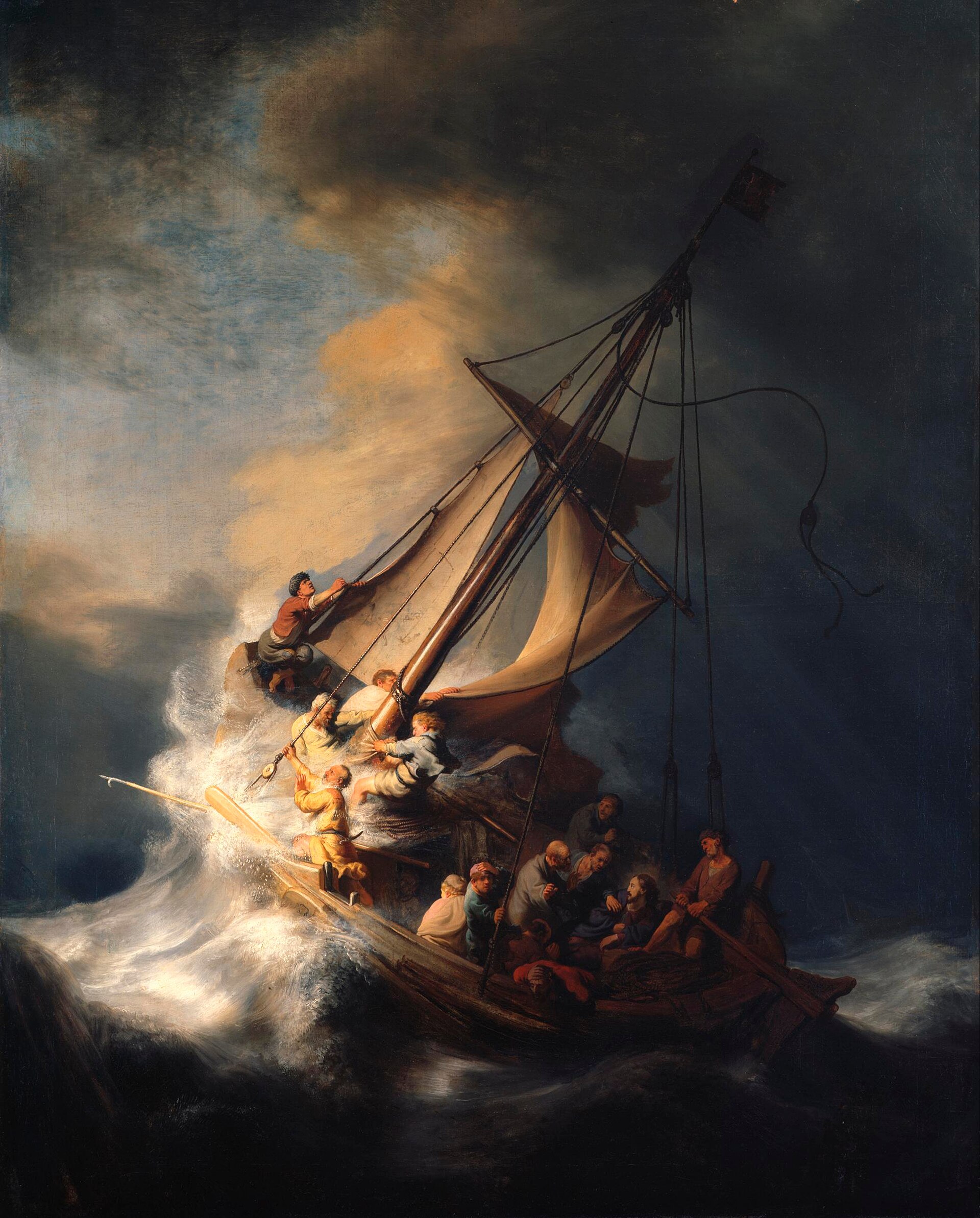
Unsolved since 1990At 1:24 a.m. on March 18, 1990, two men dressed as police talked their way into a Boston museum and spent 81 minutes cutting thirteen paintings from their frames — including Rembrandt's only seascape. Thirty-six years and a $10 million reward later, nothing has ever been recovered.
What We Know
Rick Abath was twenty-three, alone on the graveyard shift, and more interested in the Grateful Dead than in security protocol. The date was March 18, 1990. Just after 1:24 in the morning, a buzzer rang at a side door of Boston’s Isabella Stewart Gardner Museum, and two men in police uniforms, badges and all, told Abath they were responding to a disturbance call. Museum rules barred admitting anyone after hours, no exceptions. Abath let them in anyway.
Within minutes the men had Abath and a second guard bound in the basement, out of sight of the galleries above. For the next eighty-one minutes, the thieves worked with a strange, uneven confidence: they knifed Vermeer’s The Concert and three Rembrandts clean out of their Dutch Room frames, snapped a small Manet from its frame in the Blue Room, and gathered five Degas works on paper, a bronze eagle finial that once topped a Napoleonic flag, and a 3,000-year-old Chinese bronze drinking vessel. A Titian worth more than everything they took hung untouched a floor above, in a gallery the thieves never entered. On the way out, they took the security tapes.
A day guard found Abath and his colleague still tied up the next morning. Thirteen works were gone, valued at roughly $200 million at the time — a figure that has since climbed past $500 million. Motion sensors told an odd story: the only footsteps ever logged in the Blue Room that night belonged to Abath himself, recorded on his patrol at 12:27 and 12:53 a.m., before the buzzer rang.
Isabella Stewart Gardner’s 1924 will forbids the museum from ever rearranging her collection. Nothing added, nothing moved. So the empty frames have stayed exactly where the paintings hung, gilt borders around blank plaster, for thirty-six years and counting.
The Roadblock
The statute of limitations on the theft expired decades ago. Confessing today carries no legal risk at all. The reward has climbed from $1 million to $10 million. And still: no arrests, no charges, not one recovered painting. That combination — total immunity plus a life-changing payout — is what makes the silence so hard to explain.
Part of it is that the people most likely to know died fast. Four men connected to the case by investigators or informants were dead within eighteen months of the heist, three of them violently. Whatever they knew went with them, none of it under oath.
The other part is that masterpieces this famous are close to unsellable. No legitimate buyer touches a Vermeer with an FBI file number attached, which strips away the ordinary motive, cashing out, that closes most property crime. The paintings may survive precisely because nobody has found a way to turn them into money. A case built this long ago on informants and dead men’s word, rather than forensics, doesn’t get easier with time. It gets harder, one funeral at a time.
Best Guesses
The Merlino crew
Geoff Kelly ran the FBI’s Gardner investigation from 2002 until his 2024 retirement, and his 2026 book names names for the first time: George Reissfelder and Leonard DiMuzio, sent in on the orders of Dorchester repair-shop owner and mob associate Carmello Merlino. Kelly calls it amateur hour — “basically pull the stuff off the wall and carry it out.” Both alleged thieves were dead within fifteen months, Reissfelder of what his family called a suspicious overdose, DiMuzio shot and left in a car trunk. It’s the most detailed account anyone has put their name to. It is also one retired investigator’s reconstruction, decades on, of a case that never produced an indictment against anyone.
The inside job
Rick Abath was never charged in thirty-four years of scrutiny and denied any role in the theft right up until he died in 2024. He always said he’d passed his FBI polygraphs; one investigator’s account of those same tests calls the result inconclusive, not clean. What complicates the denial either way: the Blue Room’s motion sensors recorded no one but Abath that night, logged on a patrol before the thieves ever arrived, and Kelly’s book adds that Abath opened and closed a side door on an unlogged detour about an hour before the buzzer rang. Whichever version is true, he took it to his grave.
The Connecticut chain
For years the FBI’s own working theory ran through Robert Guarente, a convicted bank robber, and his associate Robert Gentile in Manchester, Connecticut. Guarente’s widow told agents she watched her husband hand Gentile two of the stolen paintings over lunch in Portland, Maine, not long after his 2002 release. A 2012 search of Gentile’s house turned up a 1990 newspaper clipping with hand-written black-market prices for the missing works, and an empty container buried under his shed. A polygraph suggested he was lying about all of it. Gentile denied everything until he died in 2021, and nothing beyond the clipping and the tub was ever found.
The Connor-Youngworth claim
In August 1997, a Boston Herald reporter was driven to a warehouse at night and shown, by flashlight, a canvas he was told was the missing Rembrandt seascape, arranged by antiques dealer William Youngworth, fronting for career thief Myles Connor, who was in prison at the time. Youngworth’s paint chips won one expert’s initial verdict of “100 percent unadulterated Rembrandt” before federal investigators matched them to the wrong tear pattern and found the accompanying “negatives” were just photographs. Youngworth was never charged over the Gardner theft itself; a retired agent who worked the case put it more simply: he “really conned a lot of people.”
The Verdict
Kelly spent more years on this case than anyone alive, and by his own account he expects an unglamorous ending: someone opens a storage unit or an inherited safe-deposit box and finds a Vermeer looking back at them. Short of that kind of luck, three things would actually move the needle. A confession, since the statute of limitations means it costs the confessor nothing today. A forensic match, paint or fiber, tied to a specific site rather than another warehouse story. Or simply more time — stolen art has surfaced from estates and attics before, decades after everyone involved was dead.
None of the four theories above needs any of that to sound plausible. All four need one of them to be true.
Where do you stand?
That’s one. There’s another every morning at 6 a.m. local time.
Share where you stand
The Rabbit Hole
- Isabella Stewart Gardner Museum: The Theftthe museum's own account, from the institution that still won't fill the frames
- FBI: Isabella Stewart Gardner Museum Heist case filethe Bureau's official case page, reward terms included
- Boston Globe: retired FBI agent offers a theory on whodunnitthe fullest public account yet of Geoff Kelly's suspects
- Boston Globe: the mystery of the paint chipsthe strange 1997 warehouse episode, told in full
- WBUR: the night watchman has diedRick Abath's own account, and the suspicion he never shook