
№ 00528 OCTOBER 2026DEATHBABYLON, MESOPOTAMIA (MODERN-DAY IRAQ)
The Death of Alexander the Great
Twelve Days, One Empire, No Verdict
Unsolved since 1998At 32, ruler of an empire from Greece to India, Alexander the Great fell ill after a banquet in Babylon. Over twelve days he lost his voice, then his body. His physicians left accounts detailed enough that doctors are still diagnosing him — and disagreeing — 2,300 years later.
What We Know
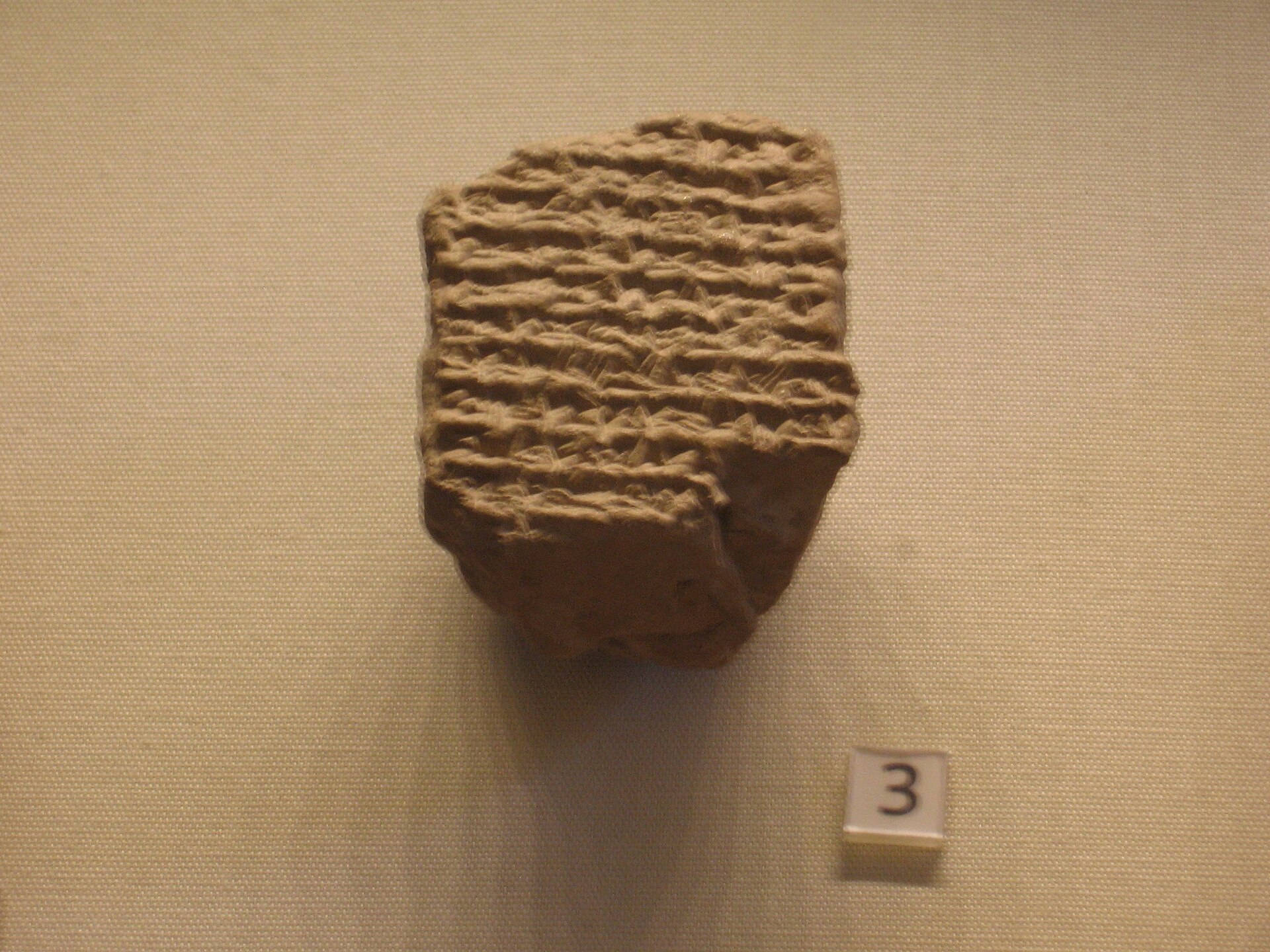
In a Babylon temple, a scribe kept the city’s daily log: the weather, the price of dates, the movements of the planets. For the twenty-ninth of the month Aiiaru, he wrote four words: “The king died. Clouds.” It is the only strictly contemporary written record of the death of Alexander the Great, and it treats the collapse of an empire spanning three continents as one line among many, filed next to the weather.
Alexander was 32, ruling from Greece to the Indus, when the illness began. He had just dined with the admiral Nearchus, then stayed up late drinking with his companion Medius. He went to bed with a fever that never fully broke. For several days he kept working through it anyway, bathing, sacrificing to the gods, still issuing orders for the fleet, while the fever climbed. The Royal Diaries, the court’s own day-by-day record kept by his secretary Eumenes, describe the illness tightening around him: worse pain, worse fever, and then, in the final days, silence. He could still recognize the officers filing past his bed. He could no longer speak to them.
He died on June 11, twelve days after the fever began. His body, left unembalmed in Babylon’s early-summer heat, was reported by Plutarch to show no sign of decay, a detail he offered as evidence against, not for, a rumor already spreading: that he had been poisoned.
Nobody examined the body. No wound, no vial, no confession survives — nothing but the accounts left by the men who watched him die, detailed enough to read like a chart, and precise enough that people are still arguing over exactly what it shows.
The Roadblock
The obstacle here isn’t a shortage of evidence. It’s evidence of the wrong kind. Arrian and Plutarch, the two best sources, wrote roughly 500 and 400 years after Alexander died, both drawing on now-lost accounts by men who were actually there: the general Ptolemy, the officer Aristobulus, the secretary Eumenes. Their descriptions are unusually specific for the ancient world: fever, worsening pain, the exact progression from speech to silence. That specificity is exactly why the case keeps attracting doctors instead of retiring as folklore.
But a symptom list filtered through two authors writing centuries later, copied and re-copied by hand for two more millennia, isn’t a chart a physician can read the way they’d read one today. There’s no lab result to check it against, no second witness to cross-examine, and no body. Alexander’s tomb, moved by his successors and then lost sometime in late antiquity, is itself a separate, unsolved mystery, and with it went any chance of testing a theory against tissue, bone, or blood. Every diagnosis offered since has had to work from the same secondhand paragraph, and none of them can be falsified by anything except a better reading of the same words.
Best Guesses
Typhoid fever
In 1996, physicians at the University of Maryland ran Alexander’s case through a hospital clinicopathological conference, using only the ancient accounts as the chart; their findings reached print two years later in the New England Journal of Medicine. Their diagnosis: Salmonella typhi, complicated by bowel perforation and an ascending paralysis that would explain his reported loss of speech. Its weakness is timing: bowel perforation from typhoid usually shows up in the third week of untreated infection or later, and Alexander was already dead. Untreated typhoid still fits the fever and the abdominal pain well enough that lead author David Oldach stood by the call: he’d “challenge someone to prove me wrong.”
Poisoned by Antipater’s sons
Alexander had just recalled Antipater, his regent in Macedon, in what read as open disgrace. Antipater’s sons were both close to the king: Cassander at court, Iolaus serving as his cupbearer, the man who’d have handed him the cup. Rumor later named them as poisoners, acting on their father’s orders, with some versions adding Aristotle’s counsel. Arrian and Plutarch, the two sources this entire case rests on, both recorded the accusation, and both said they didn’t believe it. Nobody raised it at the time; it surfaced years later, deep in a succession fight where discrediting a rival family paid real dividends. Plutarch’s own reason for doubting it: Alexander’s body, he wrote, stayed “pure and fresh.”
Guillain-Barré paralysis
Ancient physicians checked for death by watching for breath, not a pulse — the hinge of Katherine Hall’s 2018 case for Guillain-Barré syndrome, an autoimmune paralysis, often triggered by Campylobacter infection, that climbs the body from the feet while the mind stays clear. That matches the reported detail of a king who could still recognize his officers after he’d lost the ability to speak to them. In its severe form, GBS can suppress breathing almost to nothing; Hall’s reading is that Alexander wasn’t dead when Babylon believed he was. GBS is also comparatively rare, and confirming it from a secondhand symptom list is something no test can now do. A 2025 paper in the World Journal of Gastroenterology landed on the same trigger independently, after catching an AI tool citing Hall’s own paper backwards.
Chronic illness, no single cause
Take away any one dramatic cause and Alexander still had reasons to be dying — and a body that can’t be examined can’t say which one, or how many together, actually did it, which makes this the hardest theory here to either prove or kill. He’d taken an arrow through the chest in India three years earlier that nearly killed him outright, and his closest companion, Hephaestion, had died months earlier; by every account, Alexander drank harder and slept less afterward. He’d spent a decade on continuous campaign, then closed a night of heavy drinking with Medius right before the fever started. A 2022 medical-literature review of the case favored a compounding explanation like this over any single infection, its own preferred mechanism: drink-triggered pancreatitis spreading to secondary infection.
The Verdict
Somewhere, in theory, Alexander’s tomb still exists, lost sometime in late antiquity. It’s a separate mystery from this one, but the reason this one can’t be closed by examination. If it were ever found and the body identified, an actual test could do what four ancient paragraphs can’t: check bone for Salmonella DNA, screen for a toxin’s residue, look at nerve tissue for the damage Guillain-Barré leaves behind. Nothing else on offer settles this nearly as cleanly.
The 2020s have kept adding to the case without closing it. A 2025 medical paper sharpened the Guillain-Barré mechanism; a separate 2025 geology paper explained why the poisoning legend took the specific shape it did. Neither claims to have solved the death itself. One of the 2025 authors said so directly, on the record. The debate is as active now as at any point in the last 2,300 years.
The tomb is still missing, and so is the body.
Where do you stand?
That’s one. There’s another every morning at 6 a.m. local time.
Share where you stand
What Didn't Hold Up
Details that circulate with this case but failed verification against independent sources. Cut from the story above — listed so you know they weren't missed.
“Alexander was poisoned by water from the River Styx — a poison so corrosive it could only be carried in the hoof of a mule.”
Arrian and Plutarch record this accusation only to doubt it, and nobody voiced it until years after the death. A 2025 geology paper found real toxins in the Styx's springs, but its author states on record that this explains the legend, not that Alexander was poisoned this way.
“Alexander's body showed no decay for six days after his death — proof he was divine, or not yet truly dead.”
Plutarch, this article's source for the body's condition, gives no day count at all. The specific "six days" figure comes from a different ancient historian, Curtius Rufus, and neither account frames it as evidence of divinity — Plutarch offers it only as an argument against poisoning.
The Rabbit Hole
- Arrian's account of the death, in fullthe ancient text itself, including Arrian's own case for doubting the poison story
- Plutarch's Life of Alexander, chapters 75–77the fullest ancient account, free, including the Aristobulus eyewitness-adjacent version
- The Babylonian Astronomical Diary that records the deaththe only strictly contemporary written record — four words, logged by a scribe who had no idea what he was recording
- Oldach et al., "A Mysterious Death," NEJM, 1998the paper that started the modern medical-diagnosis genre for this case
- "Decoding Alexander the Great's gastrointestinal cause of death using artificial wisdom," World Journal of Gastroenterology, 2025the 2025 follow-up, and a real cautionary tale about trusting an AI tool's citations